
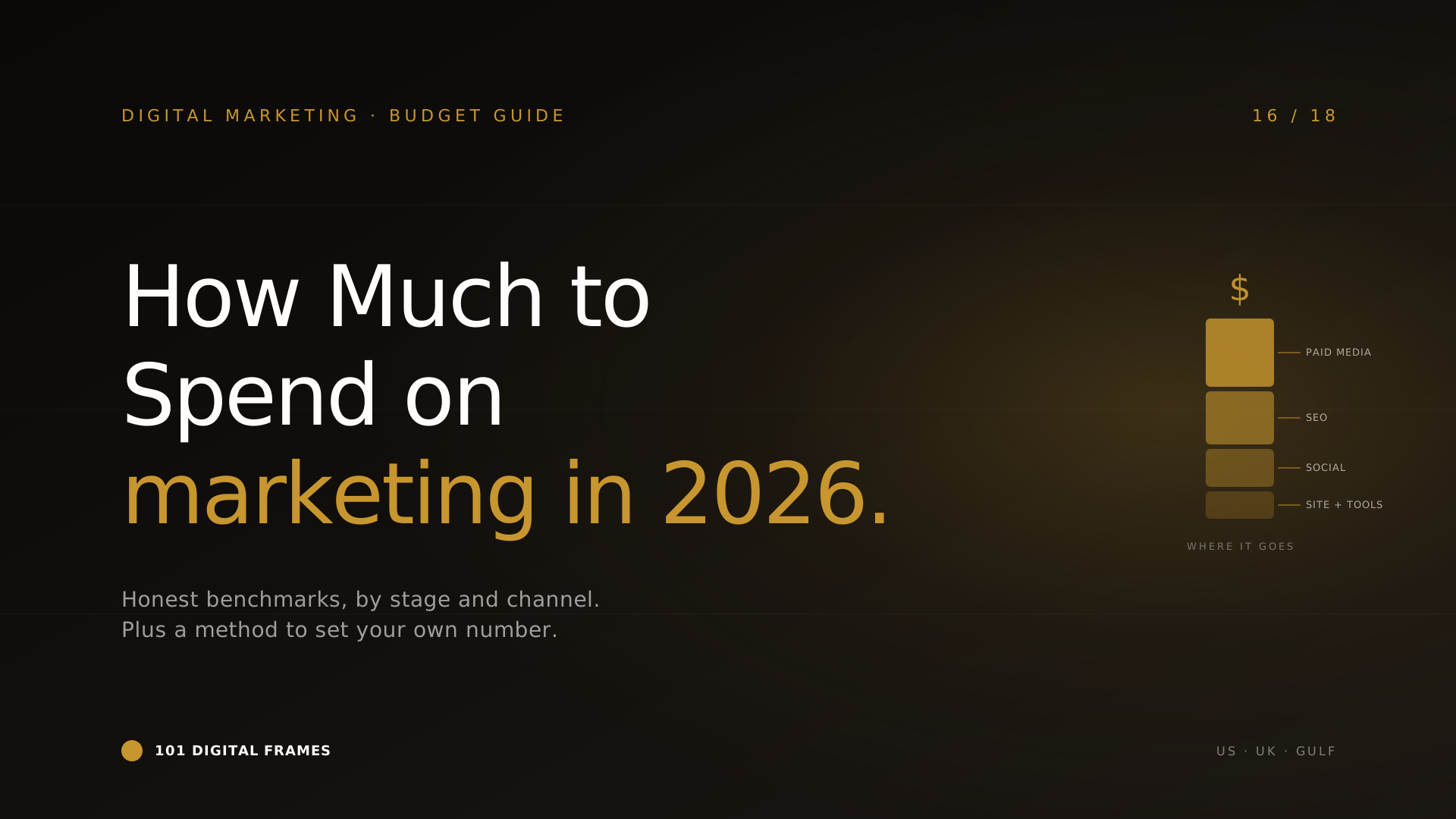
How Much Should You Spend on Digital Marketing in 2026?
July 21, 2026
Rebrand vs Brand Refresh: which does your business actually need?
July 23, 2026How Much Should You Spend on Digital Marketing in 2026?
July 21, 2026Rebrand vs Brand Refresh: which does your business actually need?
July 23, 2026"Should we do SEO or run ads?" is the wrong question — but it's the one every business asks, because agencies keep answering it as if there's a single right answer. There isn't. SEO and paid ads do different jobs, on different timelines, with different risk profiles. The real question is what split is right for your business, at your stage, with your margins and your patience.
An SEO agency will tell you SEO. A performance agency will tell you ads. Both are talking their book. This article isn't — we do both, so we have no reason to sell you one over the other. What follows is the honest version: how each channel actually works, what each really costs, the strengths and traps of each, and the budget mix that fits where you are right now.
By the end you'll be able to look at your own business and know roughly what your split should be — and spot an agency that's pushing whichever one happens to be their specialty.
Let's define the two properly first.
How each one actually works
SEO (organic)
You earn rankings in Google's unearned results by building content and authority. It's slow to start — three to nine months before real traffic — but the traffic is effectively free once it arrives and compounds over time. You're building an asset you own.
Think of it as: buying property. Expensive and slow up front, but you own it and it appreciates.
Paid ads (Google, Meta, etc.)
You pay to appear in front of people right now — search ads, social ads, retargeting. Traffic starts the day you switch it on and stops the day you switch it off. Fully measurable, fully controllable, and instant. But the moment you stop paying, it's gone.
Think of it as: renting. Instant access, full flexibility, but you never build equity and the meter never stops.
Tell us your stage and budget. We'll recommend a split based on your business, not our specialty.
The comparison, on one page
The real cost of each channel
SEO cost is mostly the work (content, technical, links). Paid cost is the work plus the media spend — you pay the agency to manage it and Google or Meta for the clicks. USD ranges for a typical SMB.
SEO
Agency/retainer: $500–$5,000/month depending on competitiveness and scope. Content-led SEO for an SMB often sits at $1,000–$3,000/month.
The catch: you pay for months before you see meaningful return. Budget for at least six months before judging it.
Paid ads
Media spend: whatever you put in — $1,000/month to six figures. Management fee: typically 10–20% of spend, or a flat $500–$3,000/month.
The catch: results are immediate but rented. Stop paying and it all disappears the same day. Costs also tend to creep up as competition bids the same keywords.
Running ads forever without building SEO is renting your entire customer pipeline. The day you pause, you're back to zero. Most businesses should be building both.
The right budget split for your stage
There's no universal answer — but there is a right answer for where you are. Here's how the split should shift as your business matures.
New business / need sales now
You can't wait six months for SEO to kick in — you need revenue to survive. Lead with paid ads to generate cash flow now, but start laying SEO foundations (a proper site, a few cornerstone pages) so the compounding asset begins building quietly in the background.
Growing, some traction
Ads keep the leads flowing while SEO starts to pull its weight. This is the balanced middle — you're funding growth today and building the asset that lowers your cost of acquisition tomorrow. Most established SMBs should live here.
Established, SEO working
Your organic traffic now carries the base load cheaply. Ads shift to a sharper role — capturing high-intent bottom-funnel searches, retargeting, and pushing specific campaigns or launches. You've built the asset; now you optimise the mix.
These are starting points, not rules. Your margin, sales cycle, and how competitive your keywords are all shift the numbers — a high-margin service business can afford more patience for SEO; a thin-margin e-commerce brand may lean on ads longer.
The AI-search shift you can't ignore
The old SEO-vs-ads maths assumed people find you by typing into Google and clicking a blue link. In 2026 that's only half the picture. AI Overviews and AI assistants now answer a large share of queries directly — the user gets their answer without clicking anyone's site at all.
This changes the calculation in two ways. First, some easy informational SEO traffic has evaporated — if AI answers the question, nobody clicks. Second, and more importantly, a new channel has opened: being the source the AI cites. Getting your business mentioned and recommended inside AI answers is becoming its own discipline, and it rewards exactly the kind of genuinely authoritative content that good SEO has always produced.
The practical takeaway: SEO isn't dead, but "rank for a keyword" is no longer the whole game. The businesses winning in 2026 build authoritative content that ranks in traditional search and gets cited by AI — while using paid ads for the bottom-funnel, ready-to-buy moments where a direct link still converts best.
In one paragraph
SEO and paid ads aren't a choice — they're a mix that shifts with your stage. SEO is buying property: slow, front-loaded, but an owned asset that compounds. Ads are renting: instant, controllable, but gone the moment you stop paying. New businesses lead with ads for cash flow while laying SEO foundations; growing businesses run roughly 50/50; established ones let cheap organic traffic carry the load and use ads for the sharp, bottom-funnel moments. In 2026, add one more rule: build content authoritative enough to rank in Google and get cited by AI, because a chunk of the old easy traffic now goes to AI answers. Anyone selling you only one channel is selling their specialty, not your best interest.
Common questions
If I can only afford one, should I do SEO or ads?+
If you need sales in the next few months to survive, ads — SEO won't deliver fast enough. If you can afford to wait six-plus months and want to build a lasting, cheaper source of traffic, SEO. For most new businesses with limited budget, start with ads for cash flow while laying basic SEO foundations, then shift budget toward SEO as it starts working.
How long does SEO take to actually work?+
Typically 3 to 9 months for meaningful traffic, longer in competitive markets. You'll see early signals (indexing, small ranking movements) within weeks, but real business impact takes months of consistent content and technical work. Budget for at least six months before judging whether it's working.
Is SEO still worth it now that AI answers so many searches?+
Yes, but the goal has evolved. Some easy informational traffic now goes to AI answers instead of clicks, so ranking for simple questions matters less. But being the authoritative source that AI Overviews and assistants cite is a growing channel — and it rewards the same high-quality, genuinely useful content that good SEO has always produced. The businesses that win build authority, not just keyword rankings.
What's a reasonable monthly marketing budget for a small business?+
A common benchmark is 5–10% of revenue on marketing, weighted higher for businesses in growth mode. In practice, many SMBs start meaningful digital marketing at $2,000–$5,000/month combined (management plus media spend) and scale from there as they see what's working. The right number depends far more on your margins and growth goals than on any fixed rule.
Google Ads or Meta ads — which should I use?+
Depends on intent. Google Ads capture people actively searching for what you sell — high intent, ready to buy, more expensive per click. Meta (Facebook/Instagram) ads interrupt people who aren't searching but match your audience — lower intent, cheaper, better for awareness and visual products. Service businesses often lead with Google; visual and impulse-purchase brands often lead with Meta. Most mature advertisers run both.
Want the right split for your business?
Book a 30-minute call. Tell us your stage, margins, and goals, and we'll recommend an SEO-and-ads split built around your business — not around whichever channel we'd rather sell. We run both, so the advice is honest.
101 Digital Frames LLC · Florida, USA · Birmingham, UK · Muscat, Oman